Showing posts with label brain. Show all posts

Monday, February 25, 2013

The Book About Blood by HP Newquist


The book that I read is called The Book About Blood By HP Newquist. It is a book that explores some fascinating ancient tales and history about blood. Scientists began to understand this fluid only one hundred years ago: how it's microscopic components flourish our whole body. Blood is spread so much all throughout your body, that if you poke a needle through your skin, you are drawing blood.  This is because blood travels through a network made up of 100,000 miles of veins, arteries and capillaries.While it is in your body,  blood is always red. It is never blue but some people think it is. This is because some veins look blue under skin. Oxygen that is rich with blood is red, and when blood cells give up oxygen, they lose their brightness. Blood turns dark red as it travels through you, before lightening again when it absorbs air. Your veins aren’t blue either. They appear that way because of the way light interacts with the layers of your skin, letting the area around your veins take on a different color.
During the 1300’s, Europe had little to no education so they believed many superstitions such as the plagues. This period condoned ideas about witches and warlocks, werewolves and vampires. People would believe almost anyone who had a “good” explanation for what was going on around them. Into this confusion came the strangest doctors to ever practice medicine: barbers.  During the Dark Ages, many barbers learned how to become surgeons. This was because of two things. The first was that many real surgeons died during plagues because  they had been infected by the people they were treating. The second was because barbers knew how to use razors, and this was an important skill when you needed to cut someone or something open. The easiest medical procedure for barbers was bloodletting. Around this time, it was called phlebotomy. It became one of the most common ways to treating various illnesses all over Europe.     Bloodletting did continue. These barbers, and the doctors after, had to be very careful when performing phlebotomy because they could easily cut open a vein and let a person bleed to death.                                                                                                                                             
Blood is created in the spongy marrow. Blood flows from your heart to your lungs and back to the  heart to bring oxygen inside your body. Blood pressure is a measure of how hard your blood is pressing against your blood vessels. This is very important because it tells doctors if your heart is beating at an appropriate strength and if there are any problems with your arteries.
The circulatory system is the highway in which your blood reaches every part of your body.  More blood goes to your brain, than to any part of your body. The Circle of Willis ensures that blood gets to the brain by a number of different ways. Everything that you put into your mouth ends up in your blood and these are the organs that play a very important role in helping blood do its job. The liver is your blood system's biggest filter. Your spleen is small, but it acts as a blood reservoir in times of emergency.
All in all, blood is very important, so try to keep it in your body!


Friday, February 22, 2013

The Brain and Love

Have you ever wondered how the brain thinks about love? How it reacts or communicates emotion? I read the book The Brain and Love by Marvin Rosen. It was interesting and very informative. It talked about many things that have to do with the brain, and how it thinks of emotions in many different ways. It talks about how the brain thinks and communicates emotions and feelings. It also talked about the history and origin of love. What I found most interesting about this book, was that if someone didn't have the attention or love needed from a mother or parent as an infant, they might have trouble loving or caring about someone in the future. This is because they have had bad love experiences, so they wouldn't want to do that again. Even though they are babies, they can sense tension, and stress.


This book also talked about animal emotions. The Brain and Love says, "It is widely accepted that animals are capable of expressing emotions. This is especially true of social animals, such as chimpanzees."


The brain thinks of love and emotion in many different ways.
It can be familial love, friendly love, or romantic love. And the brain thinks of these in all different ways.

Marvin Rosen                                                                                                   "The Brain and Love"


Thursday, February 14, 2013

Amazing (and Horrible) Diseases and Disorders

Have you ever heard songs in your head? Mistook your leg for someone elses? Thought your wife (or anybody...) was a hat? If so, then you're like one of Dr. Oliver Sacks's patients, in the book he wrote called The Man Who Mistook his Wife for a Hat and Other Clinical Tales. 


Dr. Oliver Sacks
This book is a collection of short stories and tales of Dr. Oliver Sacks's life, about his most interesting patients.  There are four parts: Losses, Excesses, Transports, and the World of the Simple. Two of my favorite stories from Losses were a man in the hospital that woke up in the middle of the night and didn't recognize his own leg - he thought that the nurses were playing a trick on him by putting a severed leg in his bed, and one about an old man that tilts 20º when he stands up. One of my favorite stories from Excesses was about to partly-deaf women who heard music in their heads. An interesting story from Transports was about a man who killed his child while on drugs, but didn't remember the crime, and then he hit his head while in an institution and had it all come back to him. A story from the World of the Simple, is about John and Michael, two autistic twins.


I thought that this book is very interesting, it has a lot of crazy stories that you would think are completely fake. It's hard to understand at times, because the language was difficult, and the science can be confusing. It takes a long time to read. If you have too much time, and are interested in the brain (and you like to read), you should read this book. I would give this book four stars.

Oliver Sacks talking about a question he has about the brain.

The Brain And Love

Have you ever asked the question, why do I feel love? The Brain And Love is a book about love and how the brain and emotions you feel ties in with that. This book describes different types of love and feelings associated with relationships and mental connections. The brain and the emotion of love come together in varying stimulating situations. One of the most interesting things I learned from this book was the triangular theory of love. The first corner of the triangle is intimacy (close feelings of connections), the second corner is decision/commitment (decision to love a person), and the third corner is passion (driving force leading to romance). There are also negative sides to love.
Marvin Rosen

Depression can come in when the one you love does not feel the same way about you. There is an incredibly strong bond between mothers and babies, so if the mother does not care about the baby, he/she might grow up to be depressed as if they're missing a piece to themselves and their. But there are many positive sides to love as well! When two people feel a strong bond towards each other it's an amazing feeling! Some people don't feel whole until they find love.

http://www.ted.com/talks/helen_fisher_studies_the_brain_in_love.html


Phineas Gage: The Man With a Hole In His Head

The different angels the tampering iron went into Gage's head


           Can you survive with a hole in your brain? Most people think not, but Phineas Gage proved them wrong. Gage's injury showed us that your brain can control your emotions and that the brain is very complicated.  I read the book Phineas Gage: A Gruesome but True Story About Brain Science by John Fleischman. This book was about Phineas Gage's  tragic accident which changed his life. Fleischman wrote this book so that people would understand Phineas Gage's injury. The book's main idea  is that a brain injury can change your life.
           Phineas Gage was a railroad worker. He blew holes in the ground for his job. One day he lost his focus on the tampering iron that he used to make sure the tnt was in position. Nobody knows why he lost his focus, but when the tnt blew up it sent the tampering iron  straight through the frontal lobe of his brian which changed his personality completely. The odd thing was he was talking and walking even immediately after the incident. The accident changed his personality from a nice, sensible person to a nasty and irritable person. The incident eventually killed him,  but it took an entire 11 years!
           I thought this book was  interesting. It talked about the brain and how it works. I liked it because it showed me things about the brain that I never knew. For example,  when you have a concussion it means your brain is swelling because the blood is pumping rapidly. Also, the book explored if Phineas Gage was lucky that he survived or unlucky that the accident happened in the first place. I thought it was very well written and it wasn't that complicated. 

Into the Mind

Into the Mind

Hey everyone! Do you want to know more about the mind and how it works? Have you ever wondered what would happen if you couldn't remember your friends faces? I've found the perfect book for you!

I thoroughly enjoyed The Mind's Eye by Oliver Sacks. It had a good balance between stories and scientific facts.The author, Oliver Sacks tells the stories of his patients, and how they relate to the mind and science. He also includes his own experiences. He has prosopagnosia, also known as face blindness. He can't recognize the faces of people he meets, or even some of his closest friends. He has to identify facial features, in order to recognize people he knows. Sacks also had a malignant tumor in his eye, and has lost stereoscopic vision. This means he can no longer perceive depth in objects, and has lost his sense of 3D. But that's not all! He also tells the stories of his patients. For example, one of his patients can't recognize objects, but can see clearly and has good vision. I loved this book, because it really makes you think about what it would be like if you had a slight defect in your brain. Your whole life would be changed, and you couldn't see like everyone else. Oliver Sacks, is an accomplished author, and has written many books about neurology and the brain. He writes his books to inform people about neurological defects and problems, and how they happen. If you're interested in the brain, and want to know more about how it works, this is the perfect book for you! It has enough stories to keep you interested, but also, has some very interesting scientific facts. I would give this book 5 stars!


The Author, Oliver Sacks

If you would like to hear a radio interview with Oliver Sacks talking about The Mind's Eye, click here.


Here's a video of Oliver Sacks talking about his book, The Mind's Eye:


Wednesday, February 13, 2013

Deciphering The Senses

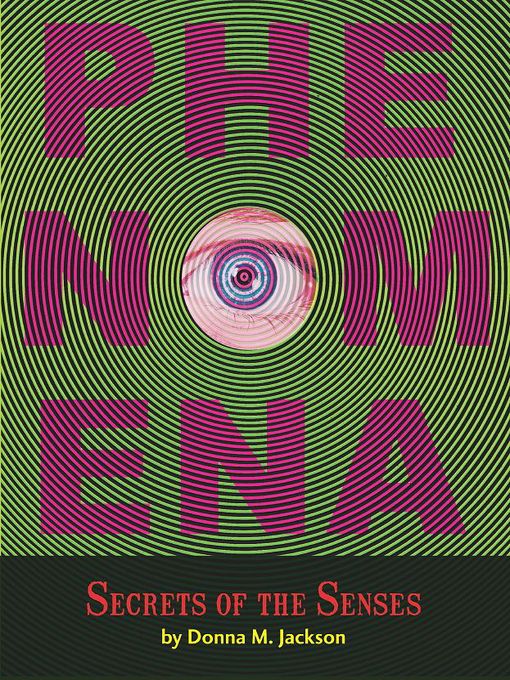
Have you ever had a déjà vu? Felt like someone was staring at you, without looking? Predicted an incident, it happened, and you thought you were some sort of "psychic"? Had a falling sensation as you were descending into a deep sleep and unconsciously jerked your body (hypnic jerk)? Experienced extremely strange coincidences and thought something unusual was behind it? Wondered why people react the way they do to certain things? If so, I recommend Phenomena!

Reading Phenomena by Donna M. Jackson was definitely a challenge. Although the writing is easy to comprehend and very informative, the book moves at a slow pace and is quite challenging to remain attentive to.


I believe Donna M. Jackson's reasoning behind deciding to put this information out in the world as a published book was that it is extremely important to be aware of our surroundings as well as our minds and bodies, etc. It is also interesting to learn about the mysteries and complications our dreams and senses entail, as well as perception, what it is and how it works. I learned so much from this book and definitely do not regret reading it! I must admit, Phenomena is very unusual, it is not similar to any of the books I have read. However, it has helped me understand more about brain science, the stages of dreams, why humans react to certain things the way they do, emotions, sensations, how the brain perceives information, coincidences, why we have déjà vus, and much more about life than most-if not all books that I have read.

Phenomena is not the most exciting book, though it is definitely informative and entails some mind-blowing moments! I recommend Phenomena if you are the type of reader that is able to deal with slow-paced books. I enjoyed Phenomena very much and guarantee you will not regret reading it, if you do decide to!