Showing posts with label Human Body. Show all posts

Monday, February 25, 2013

The Book About Blood by HP Newquist


The book that I read is called The Book About Blood By HP Newquist. It is a book that explores some fascinating ancient tales and history about blood. Scientists began to understand this fluid only one hundred years ago: how it's microscopic components flourish our whole body. Blood is spread so much all throughout your body, that if you poke a needle through your skin, you are drawing blood.  This is because blood travels through a network made up of 100,000 miles of veins, arteries and capillaries.While it is in your body,  blood is always red. It is never blue but some people think it is. This is because some veins look blue under skin. Oxygen that is rich with blood is red, and when blood cells give up oxygen, they lose their brightness. Blood turns dark red as it travels through you, before lightening again when it absorbs air. Your veins aren’t blue either. They appear that way because of the way light interacts with the layers of your skin, letting the area around your veins take on a different color.
During the 1300’s, Europe had little to no education so they believed many superstitions such as the plagues. This period condoned ideas about witches and warlocks, werewolves and vampires. People would believe almost anyone who had a “good” explanation for what was going on around them. Into this confusion came the strangest doctors to ever practice medicine: barbers.  During the Dark Ages, many barbers learned how to become surgeons. This was because of two things. The first was that many real surgeons died during plagues because  they had been infected by the people they were treating. The second was because barbers knew how to use razors, and this was an important skill when you needed to cut someone or something open. The easiest medical procedure for barbers was bloodletting. Around this time, it was called phlebotomy. It became one of the most common ways to treating various illnesses all over Europe.     Bloodletting did continue. These barbers, and the doctors after, had to be very careful when performing phlebotomy because they could easily cut open a vein and let a person bleed to death.                                                                                                                                             
Blood is created in the spongy marrow. Blood flows from your heart to your lungs and back to the  heart to bring oxygen inside your body. Blood pressure is a measure of how hard your blood is pressing against your blood vessels. This is very important because it tells doctors if your heart is beating at an appropriate strength and if there are any problems with your arteries.
The circulatory system is the highway in which your blood reaches every part of your body.  More blood goes to your brain, than to any part of your body. The Circle of Willis ensures that blood gets to the brain by a number of different ways. Everything that you put into your mouth ends up in your blood and these are the organs that play a very important role in helping blood do its job. The liver is your blood system's biggest filter. Your spleen is small, but it acts as a blood reservoir in times of emergency.
All in all, blood is very important, so try to keep it in your body!


Sunday, February 24, 2013

The Hot Zone: The origins of Ebola

You may have heard about the Ebola virus. If so, you know the ultimate horrors it can do to the human mind, and worse of all, the body. Imagine feeling sick one day. You don't feel well, so you take an asprin. Next day, you cough up your blood in black vomit. Then, you become zombie-like, not being able to think like a person. Then, you crash and bleed. That's when you bleed out all your blood either inside, or you bleed out on the outside. (Outside of your body) It also kills 95% of its victims. Now imagine this virus with the fact that it is incredibly contagious. Now it sounds like it can, and will, if it gets the chance, wipe out humans. Well, The Hot Zone describes how close it came to doing just that.

     The Hot Zone, written by Richard Preston captures the secrets of the deadly Ebola viruses, and their sister  virus Marburg. The book starts out describing The Marburg virus, a virus that makes people bleed out from under their skin, and cough up black bloody vomit. Disgusting but fascinating. It may sound hard to make that fascinating, but Richard Preston does it. The next part is about the Ebola Zaire virus, it has similar symptoms of the Marburg virus, but it kills more people. After Ebola Zaire is discovered officially, the attention switches from what it is to curing it. Sadly, there was no cure. After that, Ebola came the closest to killing off millions of humans. It was discovered outside of Washington D.C. in a monkey house, a business that supplies test monkeys from foreign countries. And you never know what happens in foreign countries. Obviously, nobody is very happy. The Army puts up countermeasures, and after much strife, the Virus is gone, receded into hiding, waiting to strike.


Biohazard team removing something possibly deadly from a hot zone.

I thoroughly enjoyed this book, and best (Or possibly worst) of all, it is all a true story! The endings to each chapter left me on the edge of my seat, yet it also included a lot of valuable information which is the best thing I will take away from it. The writing was good, but it jumped around too much to seem perfectly flowing. I enjoyed this book because of the facts and the way the author ended the chapters. The fluidity is something that made me somewhat confused as a reader, but nothing bad.

Wikipedia page for "The Hot Zone"
The authors website

The Book of Blood

        Blood has come a long way since the beginning of time. Would you like to put leeches on your skin to suck your blood to make you feel "better"? Or have doctors get as much blood out of you (this is called bloodletting) to make you feel "better"? If you are interested in blood or the history of blood and what blood does for you, the Book of Blood by HP Newquist is the book for you. HP Newquist wrote this book since he loves writing about all sorts of things from giant squids to blood. This book (as you can tell) is all about blood. There are eleven chapters in the book. The chapters range from the mystery behind blood to what blood actually does for you to the  animals that suck your blood. Also a large part of the book is what people thought about blood and what doctors (like Hippocrates) thought about blood. Toward the end there is a chapter that talks about vampires and how they came to be.


        I think this was a really good book. I learned so many new and interesting things about blood. There are some images that make you queasy though. If you are scared of blood or it creeps you out this could be a great book for you to overcome your fear and really learn a lot about blood. I never got bored of this book. It seems as if the book had an endless number of facts which would always made you say, Wow. I highly recommend this book.


               This is Dracula. Dracula sucks human blood. The Book of Blood talks about Dracula and how he came to be.

Wednesday, February 13, 2013

Deciphering The Senses

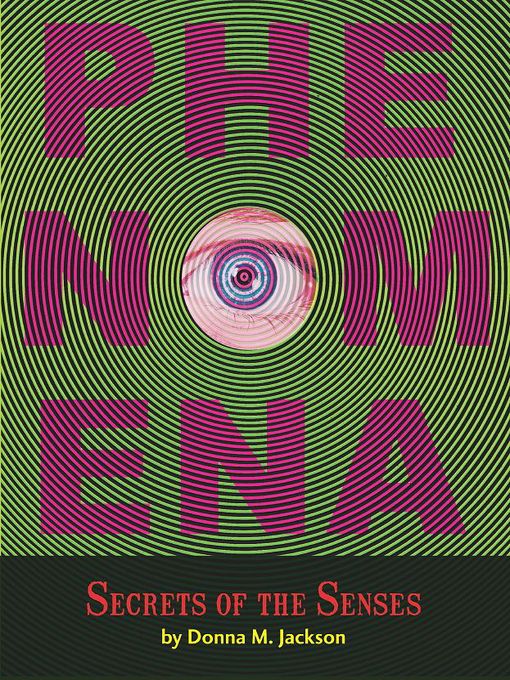
Have you ever had a déjà vu? Felt like someone was staring at you, without looking? Predicted an incident, it happened, and you thought you were some sort of "psychic"? Had a falling sensation as you were descending into a deep sleep and unconsciously jerked your body (hypnic jerk)? Experienced extremely strange coincidences and thought something unusual was behind it? Wondered why people react the way they do to certain things? If so, I recommend Phenomena!

Reading Phenomena by Donna M. Jackson was definitely a challenge. Although the writing is easy to comprehend and very informative, the book moves at a slow pace and is quite challenging to remain attentive to.


I believe Donna M. Jackson's reasoning behind deciding to put this information out in the world as a published book was that it is extremely important to be aware of our surroundings as well as our minds and bodies, etc. It is also interesting to learn about the mysteries and complications our dreams and senses entail, as well as perception, what it is and how it works. I learned so much from this book and definitely do not regret reading it! I must admit, Phenomena is very unusual, it is not similar to any of the books I have read. However, it has helped me understand more about brain science, the stages of dreams, why humans react to certain things the way they do, emotions, sensations, how the brain perceives information, coincidences, why we have déjà vus, and much more about life than most-if not all books that I have read.

Phenomena is not the most exciting book, though it is definitely informative and entails some mind-blowing moments! I recommend Phenomena if you are the type of reader that is able to deal with slow-paced books. I enjoyed Phenomena very much and guarantee you will not regret reading it, if you do decide to!